Ebola Outbreak 2026
An Ebola outbreak caused by the Bundibugyo strain of the virus is affecting communities in the Democratic Republic of the Congo (DRC) and Uganda. Unlike some previous Ebola outbreaks, there is currently no approved vaccine or specific treatment for this strain, making containment more difficult.
The outbreak is unfolding in regions already facing conflict, displacement, and fragile health systems, where frequent cross-border movement can increase the risk of transmission and complicate response efforts. Health authorities, local organizations, and international partners are working to strengthen surveillance, contact tracing, treatment capacity, and community engagement to help contain the disease.
This crisis is hitting communities that were already coping with significant humanitarian challenges. Many families in affected areas face displacement, food insecurity, limited access to healthcare, and inadequate water and sanitation services. Insecurity and ongoing conflict can restrict access to vulnerable populations and disrupt essential health services, making it harder to detect cases, provide care, and build community trust.
The combination of these factors has created conditions that make the outbreak more difficult to control and leave vulnerable families with limited options for prevention and treatment. As the situation evolves, sustained support for local health systems, frontline responders, and affected communities will remain critical to slowing transmission and saving lives.
InterAction is closely tracking the outbreak and working with Members and key partners to support a coordinated response.
Policy Recommendations
This policy brief examines the evolving outbreak, highlights the unique contributions of NGOs in community engagement, health service delivery, and outbreak containment, identifies key operational gaps, and offers recommendations for Congress and the Administration to strengthen U.S. leadership and support for the response.
InterAction Ebola Response Group
The InterAction Ebola Response Group convenes organizations every two weeks to share updates, align messaging, and identify joint advocacy priorities. Drawing on real-time input from Members working on the ground, the group is raising urgent issues including barriers to getting supplies into affected areas, the need for safe access to deliver aid, and the importance of maintaining essential health services alongside Ebola treatment.
InterAction is also engaging U.S. government partners and Congress to ensure the response is well-coordinated, adequately resourced, and informed by frontline experience.
Member Response
As the Ebola crisis in Eastern DRC and surrounding areas continues to spread, U.S.-based international nonprofits are on the frontlines of responding. Whether in partnership with the U.S. government, the United Nations, or with funds raised from the American public, their efforts are critical to the fight against the spread of this disease.
The organizations are trusted partners and service providers across Africa, with decades of experience as frontline health providers. Working hand-in-hand with local communities, they are often best positioned to respond quickly and efficiently—leveraging established relationships, local knowledge, and community trust.
Member Activities
CARE
CARE is working to raise community awareness of the disease how it spreads, distributing medical supplies to health facilities, distributing hygiene kits, training healthcare workers, and strengthening disease surveillance. In Uganda, CARE is supporting the Ministry of Health’s Ebola preparedness measures, including screening and surveillance at points of entry, rapid response readiness in high-risk districts, infection prevention and control, and public health communication.
Catholic Relief Services (CRS)
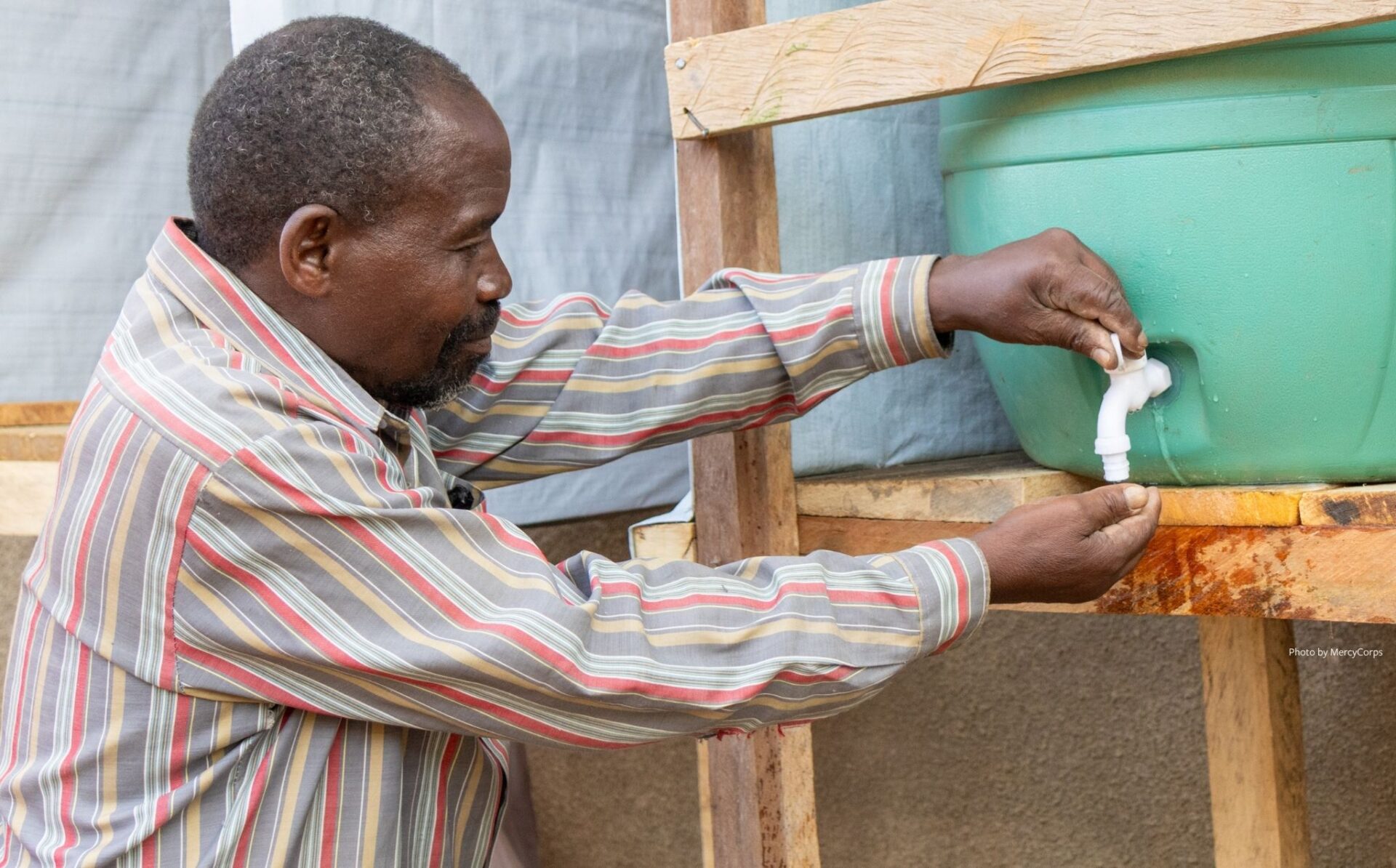
CRS is working alongside local partners, including the local church, and health authorities to provide community workers with protective equipment and practical support to respond to the outbreak. The organization is providing hand-washing stations and hand sanitizer to churches, schools, health centers and other community spaces, as well as supporting educational efforts on how Ebola spreads and when to seek care.
Corus/IMA World Health
Corus/IMA is supporting the Ministry of Health in DRC through donations of protective equipment and to assess any gaps at health facilities that could increase the risk of infections. They are also working on community engagement activities, reaching more than 200,000 people in target communities to share key messages on how to prevent the spread of Ebola. In partnership with the State Department, Corus/IMA is supporting the Ministry of Health to strengthen contact tracing and surveillance capabilities.
FHI 360
Working with U.S. government support, FHI 360 is leveraging existing projects in the region to provide surge technical and logistical assistance in collaboration with partners and in coordination with the governments of the DRC and Uganda. Initial efforts include procuring personal protective equipment (PPE), strengthening laboratory systems, supporting sample transportation, providing infection prevention and control training, and enhancing risk communication and community engagement. With support from the U.S. Department of State, FHI 360 is also working alongside national governments and global partners to strengthen infection prevention and control measures, support case investigation and contact tracing, enable safe and dignified burials, and deliver essential supplies to affected communities.
International Medical Corps
Through its U.S.-funded LEARN project, International Medical Corps has deployed rapid response support for Ebola across the region. In the DRC, it operates Ebola Treatment Centers, delivering case management, screening, triage, and infection prevention and control. In South Sudan, it supports Infectious Disease Units and trains healthcare workers on EVD and IPC. Across DRC, South Sudan, and Uganda (through partners), IMC strengthens facility-based screening, surveillance, risk communication, and preparedness, while coordinating with ministries of health and partners to ensure effective case management, referrals, logistics, training, continuity of care, and WASH services.
International Rescue Committee
IRC has deployed emergency teams to DRC and Uganda, working with the Ministries of Health. In DRC, they are repairing health facilities and isolation areas, sanitation and hygiene in high traffic public spaces, and supporting community committees to monitor and help identify cases more rapidly. They are also focusing on psychosocial support for women, children and marginalized groups managing the impacts of Ebola, safeguarding of children, and assuring case management of survivors of gender-based violence. In Uganda, IRC is supporting overall response coordination and health screening along the border.
Mercy Corps
Mercy Corps has existing programs in the Ituri, North and South Kivu regions, which are the epicenter for the outbreak. They are reorienting several ongoing activities to respond to the Ebola emergency, particularly around Water Sanitation and Hygiene services (WASH), procurement of personal protective equipment (PPE), community sensitization and large-scale messaging broadcasting. Each of these lines of effort directly supports the ability to combat the spread of the disease and provide resources to the health systems and communities managing it.
PATH
PATH has leveraged its existing U.S. government funding through the STRengthening Infectious Disease Detection Systems (STRIDES) program. PATH is a subgrantee on this project supporting targeted surveillance and coordination efforts. Through this project, PATH is deploying in Bunia helping to stand up the Emergency Operating Center there. With other sources of funding, PATH is supporting the Ministry of Health with community health workers, communications for at risk populations, and digital and data approaches to speed the response.
Project HOPE
Project HOPE is working with partners and suppliers to distribute 12 pallets of personal protective equipment and infection prevention and control materials to Uganda and the DRC. In addition, they are working closely with government officials in Uganda to support surveillance efforts and contact tracing to prevent further spread of Ebola in Uganda.
World Vision
World Vision is responding to the outbreak in DRC and Uganda, working to strengthen early detection, follow-up, and community-level readiness in affected and high-risk areas. World Vision is supporting the U.S. government response by supporting contact tracing of Ebola infected patients and other community-based surveillance preparedness activities.
iMMAP
iMMAP is strengthening the Ebola response by enhancing data-driven coordination for the Global WASH and Health Clusters. Remote support has focused on developing mapping tools and a predictive model that tracks transmission and identifies high-risk zones—successfully flagging about 60% of new outbreak areas in advance—while an interactive operational dashboard in Bunia integrates case trends, mortality data, partner presence, and risk analysis to guide real-time decision-making. Additional support is improving Health Cluster coordination through data collection, analysis, reporting, and partner guidance, contributing to more effective prioritization and overall response performance.
Save the Children
Save the Children’s Ebola outbreak response is focused on stopping transmission, protecting children and health workers, and keeping communities informed to prevent further spread. Our teams on the ground also continue to deliver services to meet pre-existing humanitarian needs for child protection, education in emergencies, and healthcare, including the deployment of a mobile health unit to reach families in rural Ituri. Save the Children has been in DRC since 1994 and has a long-established presence in Ituri, North Kivu and South Kivu provinces. In DRC, STC will continue to support health facilities with triage and isolation areas, water, sanitation and hygiene support, decontamination, safe sample transport, further training for health workers, and integrated nutrition and protection support. In Uganda, STC's response supports prevention measures in schools, hospitals and communities, child protection, and community engagement.
Food for the Hungry
Food for the Hungry has an active response in Uganda, launched June 8 in the Adjumani and Lamwo Districts, focused on WASH, infection prevention and control, and risk communication and community engagement. The organization is also launching a coordinated regional response beginning July 1 across Burundi, DRC, Ethiopia, Kenya, and Rwanda, targeting 27 high-risk healthcare facilities and approximately 285,947 people through WASH, IPC, RCCE, health, and psychosocial support interventions. This response is funded through our internal emergency fund, with fundraising efforts underway to support the broader regional scale-up.
Direct Relief
Direct Relief is coordinating closely with partners in DRC and neighboring countries to deliver requested medicines and medical supplies, including antibiotics, diagnostics, personal protective equipment, oral rehydration salts, and medications to manage chronic conditions, such as diabetes and cardiovascular disease. These medical resources are supporting efforts to curb disease transmission and provide supportive care to patients with Ebola, while also ensuring support for the broader health system. As of early July, Direct Relief had dispatched more than 27 tons of medical materials, valued at more than $15 million, to the region, including 17 tons of essential medicines and supplies for partners in DRC.
Medical Teams International
Medical Teams International is responding at scale on the frontlines of the Ebola outbreak in Uganda by screening for Ebola at points of entry, refugee transit centers along the DRC border, and at health facilities within refugee settlements to identify, isolate and refer suspected cases for testing, as well as conducting surveillance via the community health system (VHTs). Additionally, Medical Teams is operating in 10 high risk border districts to strengthen community awareness and grassroots surveillance in an environment of porous borders. As of July 21, Medical Teams has screened over 500,000 individuals, given awareness messaging to over 429,000 community members, and trained over 3100 community health workers and nearly 300 healthcare workers.
Action Against Hunger
Action Against Hunger continues to support Ebola virus disease (EVD) response and prevention in DRC and Uganda in partnership with the Ministries of Health, including support to health facilities, community engagement and awareness raising, and water, sanitation and hygiene support. In Zambia, our teams are working in border areas to strengthen health system capacity and provide essential water, sanitation, and hygiene. Action Against Hunger is also supporting preparedness activities in South Sudan.
Norwegian Refugee Council
NRC has long-standing humanitarian response activities (Shelter, WASH, Protection, Education) in Ituri, North Kivu, and South Kivu Provinces. It has supplemented these regular activities with a targeted Ebola response to support schools, health facilities, IDP camps, and high-risk communities through infection prevention and control, water, sanitation and hygiene services, and community-based response activities. Its efforts also help maintain humanitarian programs safely, reaching approximately 144,000 people, including patients, caregivers, health workers, students, teachers, community members, and affected households.