AI for Development: Promise, Peril, and Policy
In 2025, the early impacts of artificial intelligence (AI) moved from promise to reality, reshaping nearly every sector of the global economy and setting the terms of a new era of growth, power, and transformation. Across the international development and humanitarian landscape, AI is quickly moving from a futuristic concept to a practical tool—one that could help farmers anticipate climate shocks and strengthen early warning systems, reducing hunger and improving access to nutritious food. As global forums like COP30 and the G20 elevate AI governance to the top of their agendas, the question is no longer whether AI belongs in development, but how it should be used—and who gets to shape the rules.
Where Innovation Meets the ‘First Mile’
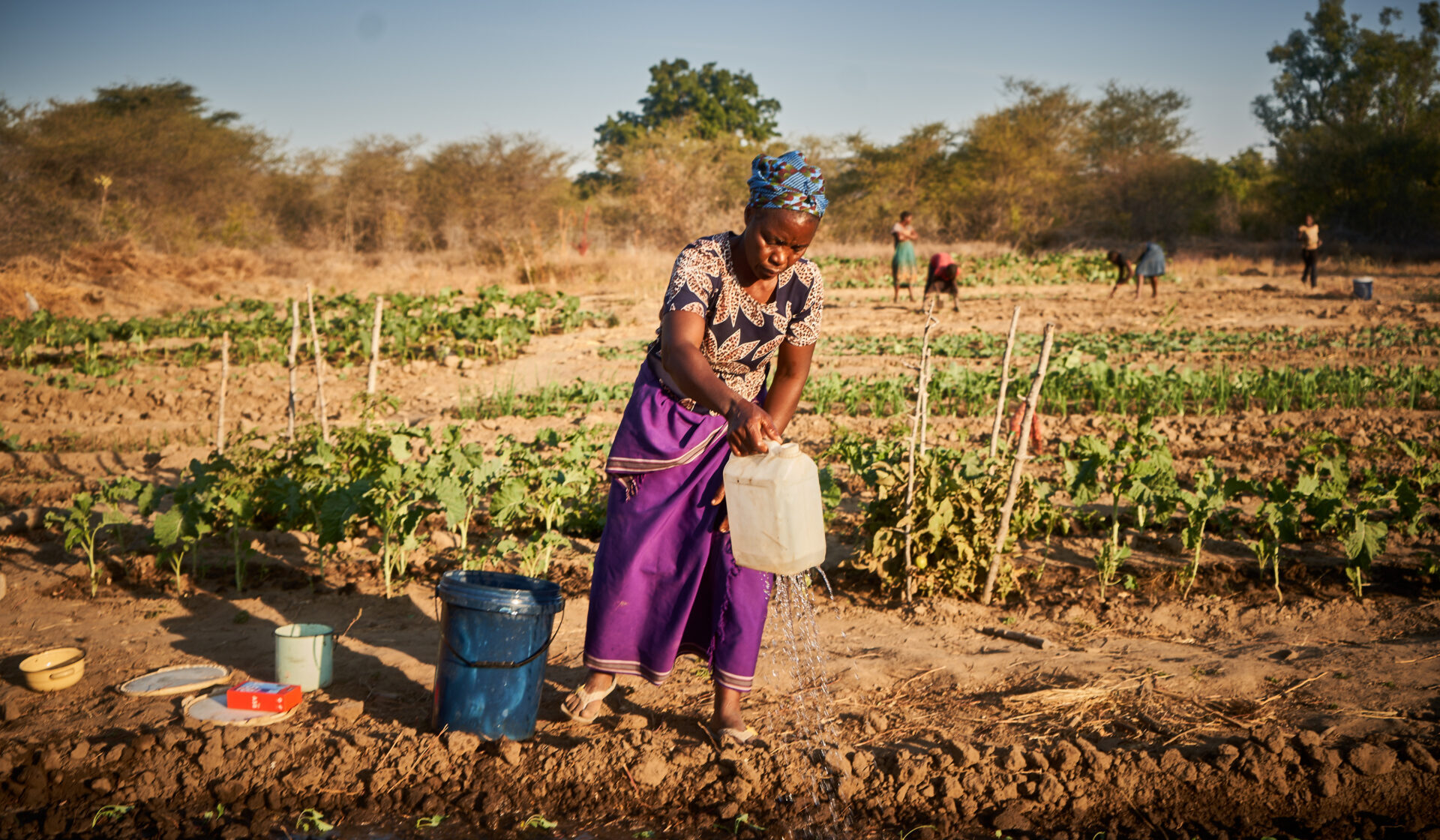
That transformation is no longer abstract. It is already being tested on farms in some of the world’s most vulnerable regions. FarmerChat, a tool introduced in 2025 by the International Fund for Agricultural Development (IFAD), provides tailored, real-time advice to farmers, helping them make informed decisions across the entire agricultural cycle—from seed planting to market access. First piloted in Nigeria, IFAD plans to expand the program to other countries in the Horn of Africa, reaching 300,000 farmers in 2027.
For decades, programs that support small-scale producers in the global south have been constrained by language barriers and limited access to tailored, real-time support. FarmerChat overcomes these challenges by delivering information in local languages and reaching farmers in some of the most remote places on earth—what IFAD calls the “first mile.” With the right guidance, farmers using the tool can proactively manage their crops and access markets, turning everyday survival into sustainable enterprise.
FarmerChat has the power to transform small scale farming but also aligns closely with long-standing U.S. development priorities. The U.S.’s Global Food Security Strategy emphasizes resilience, early warning, and locally led innovation—the very areas where AI can help farmers shift from subsistence farming to earning an income. This emphasis on locally driven, sustainable impact echoes broader thinking across the development community. InterAction’s
AI’s Promise for Development and Food Security
IFAD isn’t the only organization exploring the potential of AI for development. The global conversation around digital development is accelerating: at COP30 in November 2025, the Green Digital Action Hub and AI Climate Institute showcased the vision for a just digital transformation. The Agricultural Innovation Showcase highlighted this momentum further, with the Gates Foundation pledging $1.4 billion to expand access to innovations across sub-Saharan Africa and South Asia.
These investments are part of a growing ecosystem of public-private partnerships. FarmerChat, for example, was created thanks to collaborations with Google, Walmart, META, NASA Harvest, and the World Bank, among others—demonstrating a willingness to pair public development objectives with private technological expertise, though questions remain about ensuring access and inclusivity for the most marginalized farmers.
Soon after COP30, global powers reconvened to discuss AI for Africa at the G20 in South Africa alongside the High-Level Task Force on AI, Data Governance, and Innovation for Sustainable Development. Both gatherings made it clear: AI is now firmly part of the climate and food security agenda. What remains less clear is whether governance, accountability, and equity will keep pace with adoption.
The Governance Gap
When IFAD announced the rollout of FarmerChat, a familiar question immediately surfaced among sector experts: how can AI be prevented from harming the very people it is meant to serve? As Katherine Meighan, Chief Legal and Governance Officer at IFAD put it, “AI is a tool, not a solution.” The problem is not the technology itself, but who controls it and how it is used.
Today, a handful of tech giants like Google and Meta dominate AI research, data access, and computing power, giving them outsized influence over how AI systems are built, trained, and governed. This raises fundamental questions about who decides how AI tools serving low-income communities are designed—and whose data is used in the process. Concerns over algorithmic bias only heighten the risk that these systems could further disadvantage those who are already marginalized.
Many experts argue that AI works best as a tool for shared prosperity when it is reciprocal. A Brookings Institution panel on Opportunities and Challenges in AI Regulation recommended “regulatory sandboxes” where AI actors can collaborate to establish guardrails for real-world applications. InterAction’s Big Think reinforces this approach: responsible innovation must strengthen long-term resilience—not undermine local decision-making. Without clear governance frameworks, the same tools meant to expand opportunity could just as easily deepen inequality.
AI as Part of U.S. Policy and Multilateral Engagement
Where is the U.S. in this evolving governance landscape? While COP30 in Belém and the G20 in South Africa moved forward without strong U.S. public leadership on AI for food security, Washington has continued to engage selectively in AI-enabled development. In November 2025, the Administration announced a $150 million grant to Zipline, an AI-driven drone program delivering emergency medical supplies in five African countries. This could be a signal of the Administration’s interest in investing in AI within humanitarian and development contexts.
This is where the U.S. government can play a crucial role. Beyond individual investments, Washington could shape how AI is governed and deployed through policy and regulation. Reinstating measures for responsible AI—such as the AI Civil Rights Act introduced to Congress on December 2, 2025—would help minimize discriminatory outputs, manage risk, and ensure that AI-enabled programs like FarmerChat deliver on their promise to aid, rather than harm, people living in some of the poorest regions of the world.
What matters now is whether these investments become part of a broader, more coherent approach to AI for development. As other governments articulate their strategies for AI governance and climate-resilient growth, the U.S. has an opportunity to bring its regulatory experience, technical expertise, and development priorities into closer alignment. That opportunity will only grow more consequential with the U.S. hosting the G20 this year. The presidency offers a platform not just to showcase innovation, but to help define how AI is governed, financed, and deployed in service of global public goods.
One reality is clear: AI is already reshaping the landscape of development. The moment now calls for the United States to help shape this transformation—using its influence to prioritize fairness, accountability, and long‑term resilience—rather than remaining on the sidelines as these norms are set.
Related Updates
AI for Development: Promise, Peril, and Policy


InterAction Hosts First Session in New ConnectAid Series



Meaningful Refugee Participation at the Global Refugee Forum



Barriers to Aid: The Growing Bureaucratic and Administrative Hurdles in Latin America